Release Date 24.10.2025
Blog # 1: You Are Here
The Environment and Prehistory of the Verdantis Continent
It is hard not to write with a marked determinism about the continent of Verdantis and its environmental history. Many Cultivators in recent time have assumed that their ‘continent’, and its extensive archipelago network that radiates out from it to the west, was so magnificently endowed that it was inevitable that Seed Industries would favour it above everywhere else when rekindling humanity on Avesta. But many observers, with the pre-Avestan history of humanity weighing heavy, have never taken this good fortune to last forever. ‘The force of climate,’ wrote the great Pioneer Julian, ‘is the force of possible extinction’; and he went on to show how siro spores, and the planet's intricate mycelial network, was no rival for Seedlings - and their Cultivators.
This is why when we look at where we find ourselves today, in the Foundations Era, we must look at both the threats and possibilities to Seedling life. To begin with, you could argue that the peninsula of Verdantis is not really a ‘continent’ at all in that it is not a self contained landmass like Paxterra or Athora on the other side of the planet. Many geographers have classified it as a subcontinent of Athora-Paxterra, the ‘leg of the northern continent, the warm embrace of Veloria.’ But what is irrefutable is that its advantage of blustery, changeable weather systems in the Sea of Verdantis has long allowed deployments of Seedlings to take root: the formidable repertoire of geographical features, its landmasses, climate and geology, as well its lush flora (and ever-nascent fauna) have all ensured it to be the best springboard new life could hope for, and is essential in understanding Avestan civilisation development.
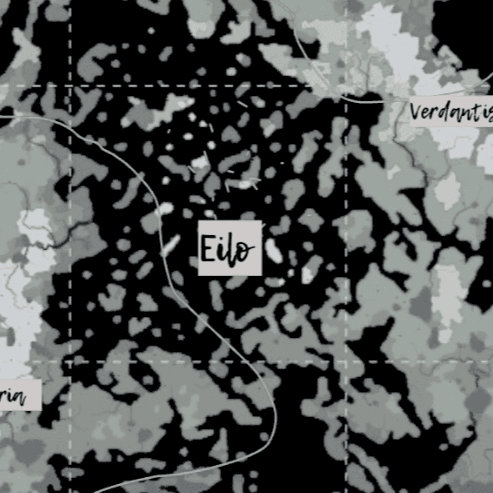
Caption: ‘The Julian Map’, the first known and somewhat inaccurate Pioneers Era rendering of Avesta. Courtesy: The Museum of Natural History, Metahaven.
So we know from archeology, and this Seed Industries historical canon, that early settlement took place on the Verdantis peninsula, the long spinal landform that reaches from the north, crosses the equator and reaches the southern cap of the planet. It’s got a mountainous spine called the Session Range which is a permafrost, alpine region, below which are surprising pockets of arid, almost desert plains. The Tempest Sea, which is in fact more of an ocean, to the east of the peninsula, provides the temperate climate that makes the region so conducive to starting new life thanks to the prevailing ocean winds that blow westerly, bringing warm air but also a moderating influx of sea air, giving the land a diversity of seasons. The Eilo Archipelago, nestled in between the larger embrace of Athora and Verdantis, can sit tight and enjoy the relatively calm and moderate climate afforded by its central location.
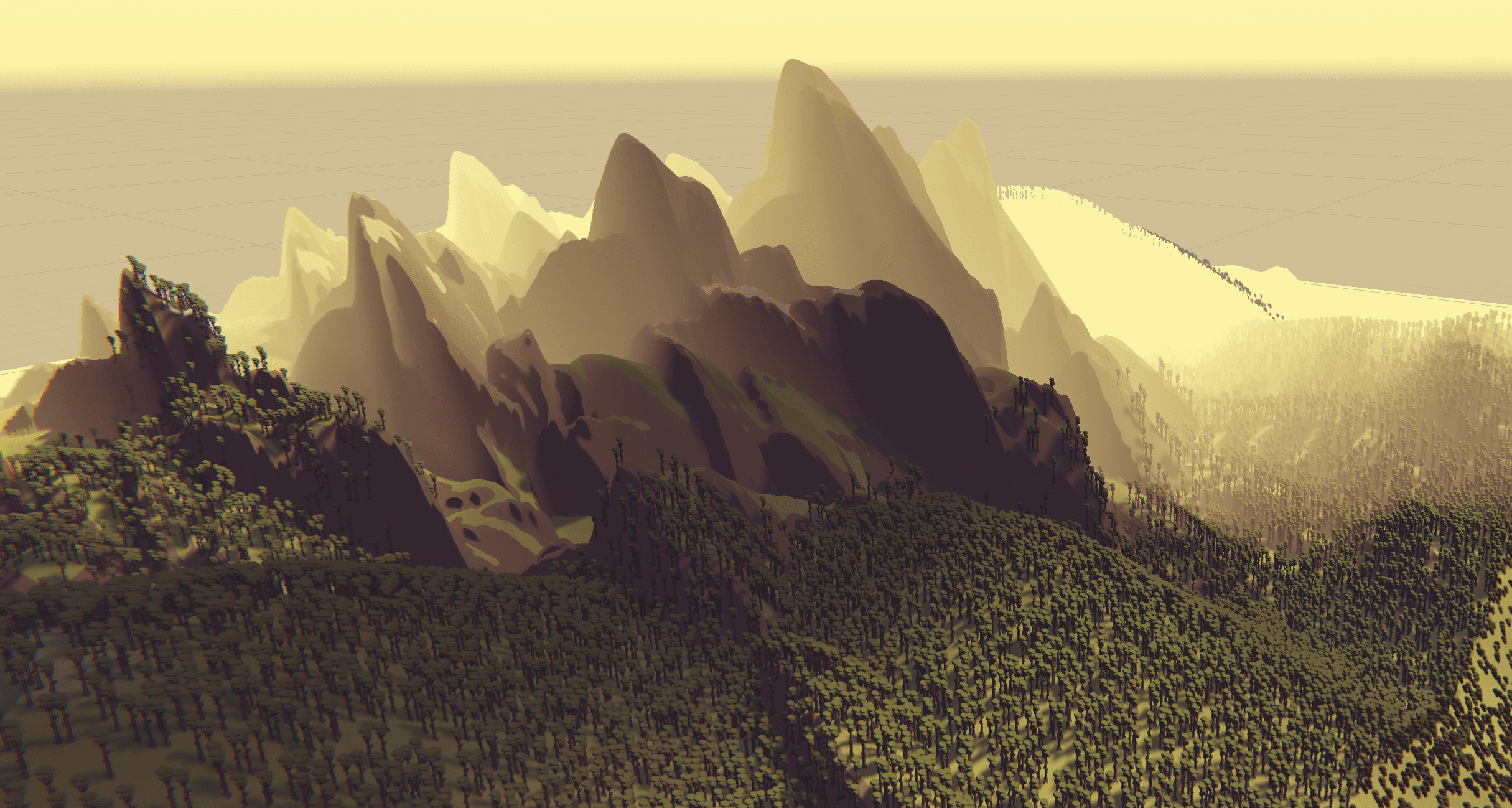
Caption: The Session Range mountains as seen from the west. Courtesy: The Museum of Natural History, Metahaven
Another key deciding factor in the choice of this region for deployments to the surface is of course the Dezima space station. This is arguably Seed Industries, and therefore humanity’s, longest lasting presence the Tau Ceti system, and therefore the biggest influence on Verdantis’ development as the cradle for humanity 2.0. Dezima traces a polar orbit that carries it directly over the Eilo archipelago once each planetary rotation. Each pass synchronizes its plasma thrusters to the Eilo’s kernels and spaceports, aligning the station’s path with this region of the planet. Tethered thus, the area has always had a direct relation to the logistical, almost umbilical one could say, input of Dezima and Seed Industries.
And this brings us to the Era of MX Terraforming. This was the earliest interaction of Terran humanity with the planet of Avesta. Once the first areas on Verdantis were cleared of siro spores (of which we will discuss in a later part of the series), the first Seedlings stepped foot on the planet. The area, from a psychological point of view, presented these Pioneers with a stimulating blend of both wonder and danger. The starting conditions were determined from the massive datasets that Neutrino Computers had built up over the inter-system vantage of both Earth based simulations and Avestan observations. For the very first Seedlings, life was indeed challenging, but also rewarding. Seasonal rhymes, much like on earth, fostered the need for tradition and forethought - planning and the growth of scheduled communal activities, in short culture, came about in great bursts of advancement. However the routine set back of siro spore wipeouts has meant that life has continually seen these cultural flourishes ebb and flow. From a historical point of view, it’s as if the petri dish of Seedling life was under the microscope, and so many tests, each with different starting conditions, have been carried out.
This early infrastructure can still be seen on the landscape to this day, although it is more and more rare, due to quite how much time has passed. But the large MX machines are reminders that the planet is not a pristine home, despite how much life can flourish there – it’s a home far from the origin, a negotiated habitat that can never be taken for granted. This and following eras were marked with an adversarial relationship with Seed Industries. We know that there was The Terran Dead, which was a people derived from Pioneers who believed in resurrectionary cosmology, based on a belief system around the origins of Seed Industries. They had an intense, if somewhat skewed, understanding of Earth’s history and its relation and influence on Avestan life. What we can gather from the little we do know of them, is Seedlings’ ability to create cultural and spiritual systems in the face of life lived on Avesta. Again, the starting conditions result in the variation produced.
We’re aware that any effort to create the lore of Avesta, from the perspective of either Seedlings or their Cultivators, raises questions about what we mean by both concepts: ‘history’ and ‘Verdantis’. The landmass, its beginning and end, is unclear: the world is still being mapped and The Eilo Archipelago, the receding starting line for planetary settlement, seems to grow more islands with every cartographic review. And ‘history’ itself is ambiguous: sure we may be talking about the past in general, or else, in distinction to what Seed Industries knows but chooses not to tell us, we have to fight against the tides of prehistory, those forces that rely so much upon myth, rumour, and certainly archaeology.
But for us, in either case, we begin our journey at The Eilo Archipelago, where Seedling life has so often begun before.
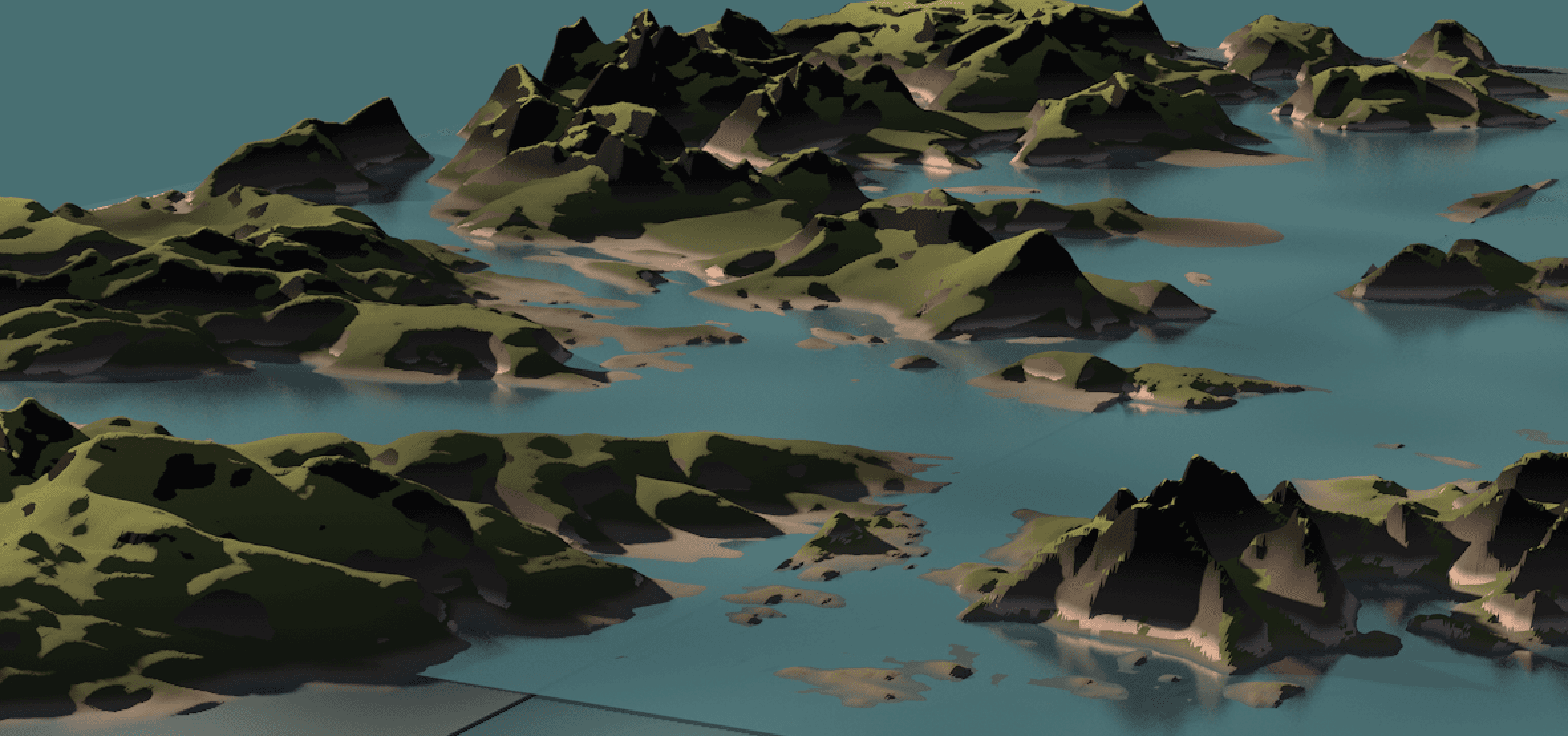
Caption: “Where it all began, and where it will all begin again’, a tiny corner of The Eilo Archipelago. Courtesy: The Museum of Natural History, Metahaven